
What’s in My Trial Bag: The Complete Packing Checklist for Trial Days
Imagine you are standing outside a courtroom at 8:40 a.m. and the exhibit binder you need is sitting on your desk back at the office. That panic? – something none of us ever want to feel. That's why I use a checklist, double and triple check everything, and pack my trial bag like a mobile office — because during trial, that's what it is.
I've put my entire packing system into a free downloadable Trial Bag Checklist — every section below, with checkboxes and room for quantities and notes. The other half of my system — my hyperlinked, indexed trial notebook template — is free with The Law Closet newsletter. More at the end.
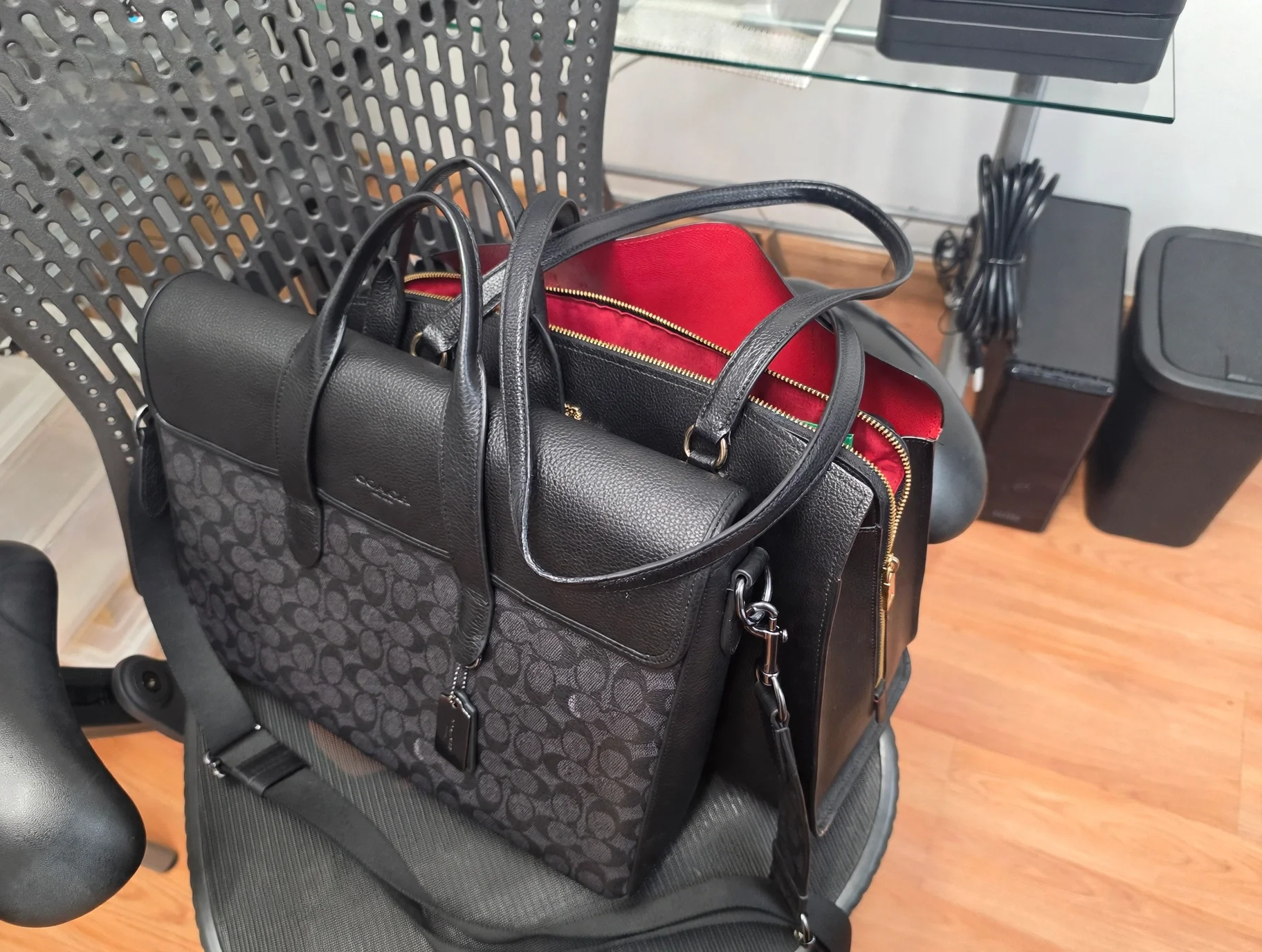
The perfect pairing
The first thing in the bag: the trial notebook
Everything starts with the trial notebook. Not the exhibits, not the laptop — the notebook. It's the brain of the whole operation: case info, calendar, witnesses, exhibits, filings, depositions, jury notes, daily logs, all one click apart.
This is something you start working on the moment the court assigns trial deadlines, months before the trial. Having the notebook will help you stay on track, manage deadlines, manage logistics, and keep things running smoothly.
I pack two copies: printed and electronic, the electronic one on the trial laptop. If one dies, the other keeps the case moving. Redundancy isn't paranoia during trial. It's professionalism.
My trial notebook is hyperlinked and indexed — every section one click from every other.
The exact template I use — generalized for use in any jurisdiction, nothing proprietary — is free for newsletter subscribers. Same system, scrubbed clean for public use.
You can get a copy of my exact trial notebook here: https://www.thelawcloset.com/newsletter
Trial items: the things the case can't go forward without
Pack these first. Active pleadings — complaint, answer, pretrial statements, stipulations, orders, & key rulings.
Exhibits get their own subsystem: originals in a binder, and copies in binders for the court, the witness, opposing counsel. Have a blank exhibit list prepared to keep track of which exhibits were admitted by each side.
Witness materials: list and schedule with contact information, witness folders, direct and cross outlines, deposition transcripts, summaries, subpoenas and proofs of service, & expert reports and CVs for the expert witnesses.
Jury: seating chart, questionnaire tracking, notebook – you'll be taking notes quickly during jury selection.
Key contacts: court staff, team, witnesses, vendors. When something goes sideways, you don't want to be Googling the trial tech team's number from the hallway.
I have all of the exhibits stored electronically, on my laptop, as well as the printed copies.
For everything referenced in this section, bring both the printed copies and have a digital copy on your laptop so you will never be without. If one fails, there is a second option.
Demonstratives: what the jury will look at
Anything the jury sees: enlargements and foam boards, timelines, charts, diagrams, maps, enlarged photos, models, medical illustrations, printed slides.
Plus the gear — easel, flip chart pad, carrying case, pointer, markers, tape, push pins, magnets. And a cloth to cover boards you haven't shown yet. Never let the jury see tomorrow's demonstrative today. Alternatively, you may have a tech set up such as a projector, TV, or screen. Make sure you know your portion of the setup. If you've hired a service, have open communication.
Pro Tip: Talk to the Judge's staff ahead of time and ask if you can come to the courtroom the day before to set up. See the layout. Bring the large items.
Office supplies: a small office in a box
You are setting up a working office in a courtroom or a war room, for days or possibly weeks. Pack like it. Legal pads, highlighters, correction tape. Sticky notes and flags, file folders, an empty binder, dividers, and blank binder tabs. Stapler and staples, staple remover, binder clips, paper clips, rubber bands, tape, scissors, three-hole punch, ruler. Bring printer paper, envelopes, and business cards. It sounds like a lot until the morning you need a three-hole punch at 8:15 a.m. and the courthouse doesn't have one.
Technology: test everything the day before
My rule: test everything the day before, and bring a backup for anything the trial depends on.
Computers: Laptop and charger, tablet and charger
Connections: I polled working paralegals, because courtroom tech is where everyone has a war story. HDMI cable, video adapters (USB-C, DisplayPort, VGA — bring all three), a long extension cord, a power strip, gaffer tape for the cords. Find out what tech the courtroom has before trial day and have the appropriate connections for your setup.
If you can get into the courtroom the day before, do it — find the actual displays and inputs, plug in your equipment, confirm it's all compatible, and test your presentations, video, and sound on the real setup. Then bring the exact cords and adapters that worked.
Data: a backup flash drive with all exhibits and videos and a second flash drive with the same files, another flash drive and copy of that flash drive with all other working files saved for offline use (never trust courthouse wifi), several blank flash drives, team passwords and logins. Make sure to label all the flash drives and bring labels for the empty ones in case they get used.
Printing and internet: portable printer, extra ink, printer paper, printer cable(s) if needed, mobile hotspot, portable scanner or scanning app
Phones: chargers, battery pack, and — non-negotiable — silent before entering the courtroom. Every day. No exceptions.
Pro Tip: A small folding table goes a long way for your printer setup, but know your court. Will it be set up in the courtroom? If so, is there space? Does your team have a "war room?"
Snacks and drinks: quiet food for long days
Trial days are long, breaks are short, and a courtroom is not your kitchen. My rules: quiet to open, no smell, no stains. Check the courthouse rules on food and drink before you assume anything.
Drinks: bottled water, a refillable bottle, coffee or tea in a spill-proof cup, electrolyte packets.
Snacks: protein or granola bars, nuts or trail mix, crackers, fruit, hard candy or mints, gum for breaks only.
Lunch: pack it or order ahead. Plus napkins and wet wipes, hand sanitizer, utensils, small trash bags, cash or a card for the cafeteria.
One paralegal suggested to pre-open the mints before court, so you're not making crinkly wrapper noises in front of the jury. That's the kind of detail you only learn from someone who's lived it.
Bring Tide pens and delta flossers for basic post-meal hygiene.
Medicines: pack like a pharmacist, ask like a professional
I personally pack a whole variety of pain meds — Tylenol, Aleve, and Excedrin — because different headaches need different tools and a trial day will find every one of them.
But ask your attorneys which brands they prefer. Real tip from a veteran paralegal: when someone's head is pounding at 2 p.m., handing them the brand they actually take matters.
Beyond pain relief: antacid, non-drowsy allergy meds, cough drops and throat lozenges (for the three-hour cross), cold medicine, upset stomach medicine, eye drops. I'm also a fan of Airborne or Emergen-C to avoid getting sick, especially if you are traveling for trial! Masks are a must-have too, especially in the airport.
First aid: bandages, antiseptic wipes, hand sanitizer, tissues, lip balm, blister pads — someone always gets a blister from the courthouse hallways by day three.
Personal medical: everyone keeps their own prescriptions on them, always. Reading glasses or spare contacts plus solution, emergency contact info for each team member. Hopefully never needed. Always packed. Set reminders for non-negotiable prescriptions and keep some saltines on hand if they need to be taken with food.
Personal and comfort: the small things that rescue a long day
Trial is a marathon, and looking put-together on day six takes deliberate packing. Spare shirt or blouse, spare tie or hosiery — one paralegal never goes to trial without extra pantyhose, and she's right — a Tide pen (made for trial days), lint roller, safety pins and a small sewing kit, comfortable shoes, a sweater or jacket because it is respectful to keep arms covered in a courtroom, even if it's hot, and an umbrella.
Grooming: toothbrush, toothpaste, floss picks, mints, deodorant, comb, hand lotion, glasses wipes. Feminine hygiene products — nobody lists these and everybody needs them at some point. I'm listing them.
Wallet: photo ID, bar or court ID, parking pass or cash, small bills, the firm credit card. Some federal courthouses now require you to have a Real ID. In the event you don't have this, a passport works the same.
Good shoes deserve emphasis. A veteran trial paralegal told me her number one must-have is good shoes, full stop. You'll be on your feet, hauling bags, standing in hallways. Your feet are trial equipment.
Client and witness needs
For the client: notepad and pen, water and tissues, written directions with parking and the meeting place, the day's schedule, any medical or mobility items they need, phone numbers for their family or ride.
For witnesses: the schedule with arrival times, copies of each subpoena, parking or reimbursement forms, fee checks, water for the waiting area, and a team member assigned to meet each witness. Nobody should be wandering a courthouse alone wondering where to go. That's on us.
The final check: the routine that catches everything
The checklist is only as good as the routine around it. I run this three times: night before, morning of, end of each day.
Night before: every tab reviewed. Laptops, phones, battery packs charging. Exhibits and videos opened on both laptops. Bags and boxes counted. Car loaded or bags by the door. Tomorrow's witnesses confirmed. Morning of: phones on silent, ID and parking handled, one more look at the witness schedule. End of day: notes filed in the trial notebook while fresh, tomorrow's witnesses re-confirmed, everything charging. The daily log exists for exactly this reason — the day you skip it is the day you forget the detail that mattered.
Get the free checklist
Everything above is in my free Trial Bag Checklist download — checkboxes, quantity and notes columns, an overview page to track every bag and box, and a hyperlinked index to jump between sections. Print it or use it on your tablet. It's yours.
And the other half of the system — my hyperlinked, indexed trial notebook template, the exact structure I use to keep a trial organized — is free when you join The Law Closet newsletter. Practical advice for legal professionals, plus free PDFs. Sign up and the template is in your inbox: https://www.thelawcloset.com/newsletter
— The Law Closet
