
Desk Job Fitness: 8 Micro-Habits That Actually Work
Five pounds the first year. That's all it was, at first.
Five pounds doesn't make a big difference. You don't buy new pants over five pounds. You don't panic over five pounds. My first year in a sedentary office setting after years of waitressing, five pounds happened and I still looked and felt like me.
But here's the math: five pounds a year, six years in a row, is thirty pounds. Six years, ten years, twenty years, thirty? The time flew by and suddenly I had to change my clothing style. My favorite pieces were no longer flattering. And then came the exhaustion; waking up tired, the 2PM crash, the need for more and more coffee.
Eventually, I wasn’t enjoying the things I used to. I was at my kids’ activities after work, but not as present, not as enthusiastic. As far as things for me, I stopped wanting to go out or go to social events. All I wanted was to have a full night's sleep (or maybe a full 24-hr-day’s sleep!) and wake up and feel energized.
Before the desk job, I was a waitress. I was on my feet all day, every day, carrying heavy trays and running between tables. Even after having two kids, although my shape changed a little, I maintained my weight with occasional dieting and a little bit of exercise.
The desk job changed everything. Sitting for eight, nine, ten or more hours a day feels like a downward battle that never ends. Even with extreme means; crash diets, keto, hardcore expensive memberships at places like OrangeTheory, I couldn’t get it under control. Each attempt compounded the exhaustion eventually causing me to crash and burn and ultimately gain back all of the weight and more. Every time. It became discouraging. My body felt more sluggish and more defeated with each try.
Eventually, I was introduced to a new fitness concept that changed everything: Microhabits.
This was already a concept I used in other parts of my life.
The philosophy is that when you are already a busy person, juggling a lot of balls, with the weight of the world on your shoulders, you need a plan that isn’t going to crush you. I love my career and often spend 50 hours or more per week in the office. I’m a single mom of a 12 and 15 year old, both of whom have activities like it’s their full time job (and mine!). I also am going to school in the evenings to continue my education. I have a dog. I maintain a home.
I kept failing in the past because I overextended myself, going for extreme measures. When a ball needed to be dropped–it was always the “me” ball, because I couldn’t afford to drop any of the others. So in order to give myself the care I need and deserve in order to take care of everything that I am responsible for, it needs to be sustainable.
Now let me be clear about something, because this matters: this is not about how I look. I was happy with how I looked before, and I'm happy with how I look now. But I do recognize that this extra weight is a health problem. And I'm starting to feel it — not in the mirror, but in my energy.
I work so hard at my career, and I love my career. Same with my kids. But I also want to love me at the end of the day. I want time for me when I'm done working. Time for me to really live and socialize and enjoy things that I love, not just time for the burnout to set in deep at the end of everything else. That's what this is about — not smaller pants. Energy. A life that feels good to live in.
So yes, this is a fashion blog, and yes, this post is about habits instead of hemlines. But the philosophy is the same: dress the body you have right now, and take care of that body. My goal was always building a life that felt better to live in.
I'm not a doctor or a trainer. What I am is a woman with a desk job who tested this on herself. I've tried so many things over the years. What worked for me was not extreme measures but small, incremental habits, stacked one by one, until each one became automatic and takes zero mental energy to maintain. My experiences are authentic. The research is behind the results. You get both.
The method: micro-habits, one at a time
Do not try to do all eight of these at once. That's how every January resolution dies by February.
Pick one. Do only that one for a few weeks until it's automatic, then add the next.
Research shows it takes an average of 66 days (about two months) to lock in a habit, with a range of 18 to 254 depending on the person and the habit (Lally et al., 2010). So give each one at least 30 days. No rush. Slow and steady isn't just a cliché here — it's the entire strategy.
I started with habit #1 months before I touched the rest.
The purpose of this is to make your new, healthy lifestyle effortless. Once something becomes a habit, it stops being a choice and it's automatic. It's all about making your body into an automated system, just like the workflows you create at your job. All the benefits, without the mental load.
Another strategy is habit stacking — linking one habit to another so the first one triggers the second.
If-then plans work: "when I walk in the door, I put the water bottles on my desk." A meta-analysis of 94 studies found that these if-then plans have a medium-to-large effect on actually reaching your goals, because they make the habit fire automatically (Gollwitzer & Sheeran, 2006).
The whole game is automation. Put in just enough effort; get yourself on autopilot when it comes to your health.
Habit 1: 10-minute morning walk
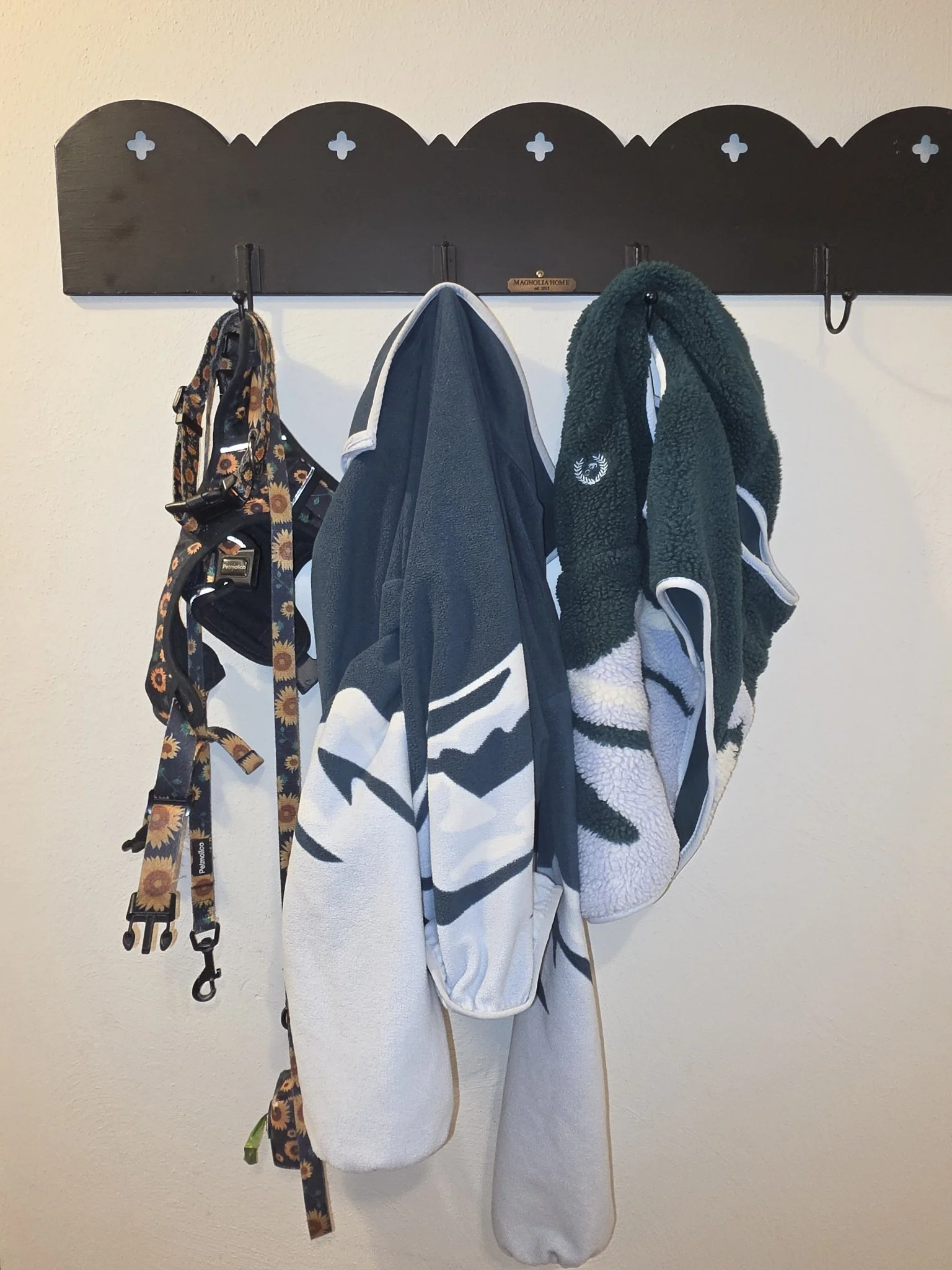
Before work, before anything — I take a 10-minute walk around my neighborhood. I started this back in April, before any of the other habits. This was my first habit and it's locked in now. I take my dog on the 10-minute walk and go longer on weekends. The only thing that stops me is heavy rain, as my dog is very opposed to rain; otherwise, she takes a skipped walk as a personal insult.
My dog is the reason I'm consistent. She wants her walk, so we go. No dog? You can do this on your own. The point is 10 minutes, every single morning, no negotiations.
Here's why it matters for desk workers: without any effort, I was getting 2,000–3,000 steps a day. On a normal day now I'm at 5,000–6,000. The goal I'm shooting for is 7,000. The point is to set an attainable goal. Wherever you are at, add 2,000.
A ten-minute walk gets you about 1,000 steps. Once you are a master of this, add more. You can get steps by parking farther away, getting a walking pad if you have a standing desk, or by simply getting up to move for a few minutes every hour.
The stress payoff is real, too: in one study, a walk cut salivary cortisol by more than a third — and by over half when the walk was in nature (International Journal of Environmental Research and Public Health, 2024). A 2025 randomized trial found the same: walking in green space significantly lowered cortisol compared to walking in the city. My morning walk is through my neighborhood with my dog — it counts.
Optional bonus: if you can squeeze in a second walk — after work or later in the evening — take it. The calories are minor; the wind-down is the point. After a full day in fight-or-flight mode, that transition matters more than you'd think. Don't stress if you can't. Some evenings I'm rushing to cheer practice or it's just life. The morning walk is the lock-in. This one's bonus.
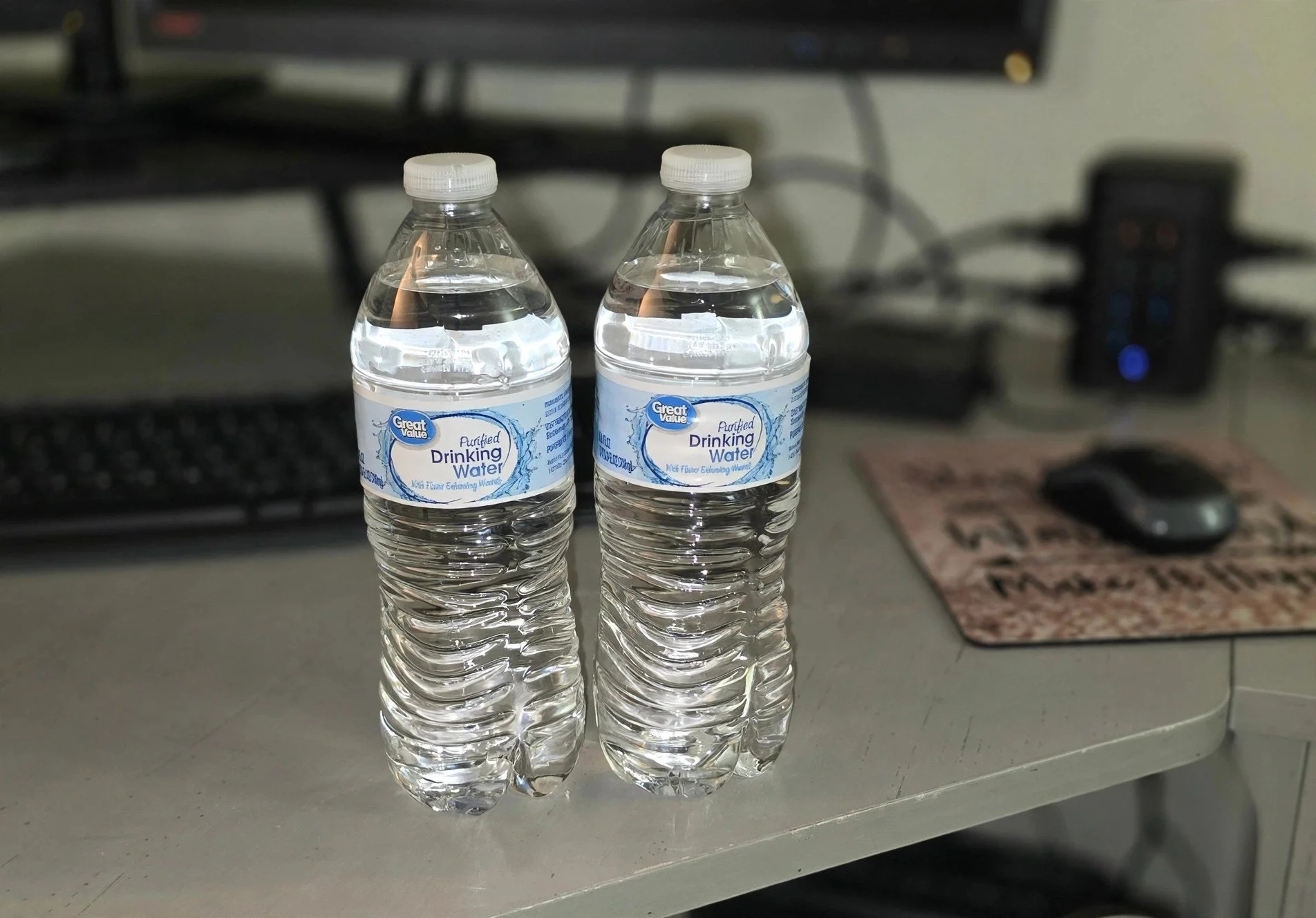
Habit 2: Two water bottles on your desk the second you walk in
This one is habit stacking at its simplest. I walk in the door, and before I do anything else, I put two bottles of water on my desk. I drink them by 3 p.m. At 3 p.m., I get two more. Four bottles by end of day is roughly eight cups of water.
That's it. That's the habit — not "drink more water" in the abstract, but the physical act of putting the bottles on the desk the moment I arrive. The drinking takes care of itself once they're sitting there staring at me.
Do this one at the same time as habit #3, because #2 is so insanely easy and it actually helps with #3: once you're drinking that much water, you're going to have to get up and go to the bathroom. Those forced breaks become your reminder to move.
And it's not just about thirst. In a double-blind trial, dehydration impaired memory and working memory, while drinking water improved vigor, fatigue, and processing speed (Nutrients, 2021). That 2 p.m. crash I kept blaming on lunch? Half the time it was a water problem.
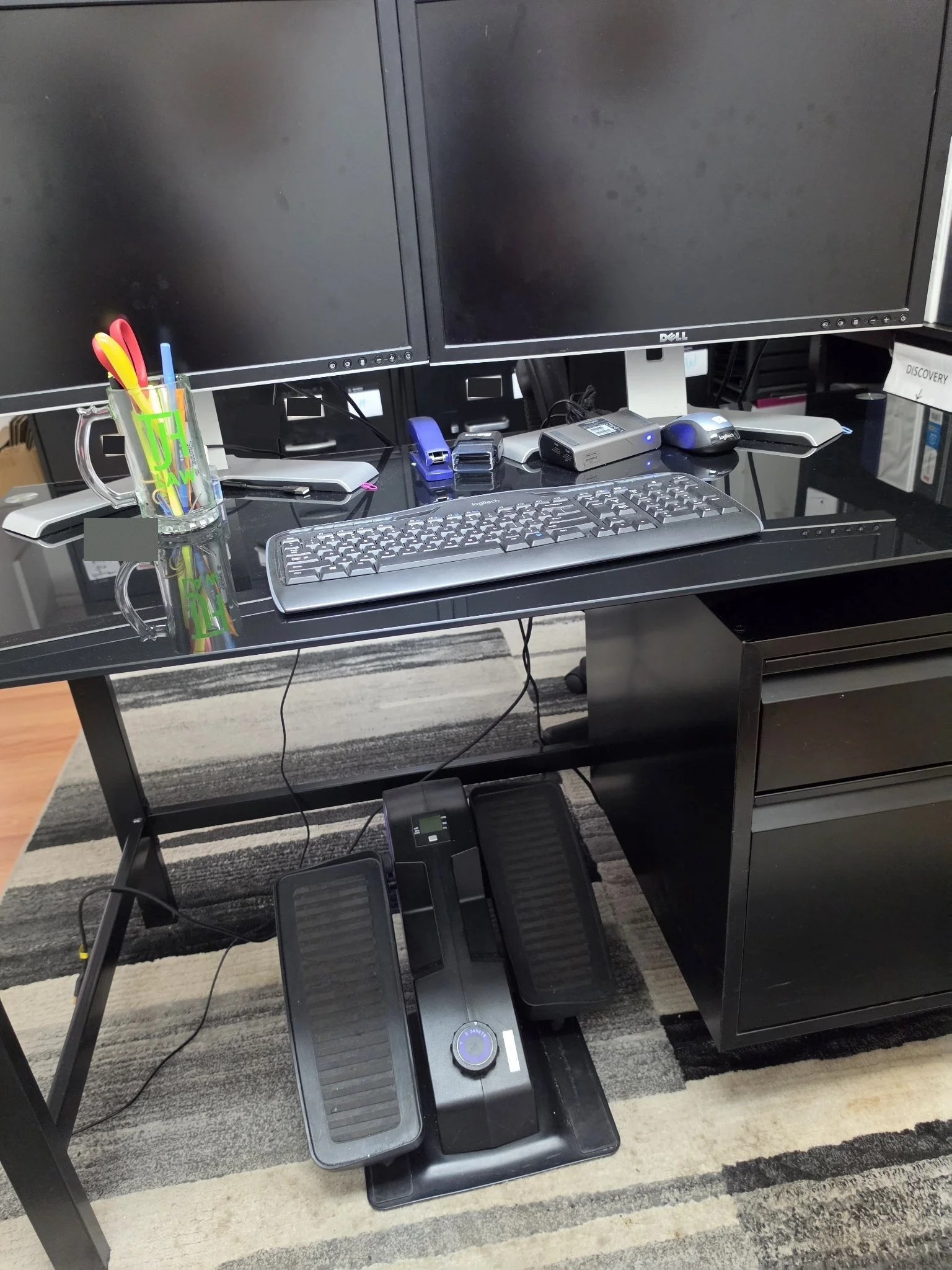
Habit 3: Five minutes of movement every hour
Get up. Walk around the office. It doesn't have to be a whole production — just don't sit for four straight hours without moving. The real goal is to hit 5 minutes of meaningful movement per hour. This little bit of movement will keep your metabolism alive through the day, instead of letting it fall asleep.
One trick I use at work is a desk bike, pictured above. This gives me some motion while I work
The research on this one is almost suspiciously perfect: Columbia researchers tested different "exercise snack" schedules and found that just 5 minutes of walking every 30 minutes cut post-meal blood sugar spikes by 58% — and it also improved mood and reduced fatigue (Columbia University, 2023). Five minutes. That's the whole prescription.
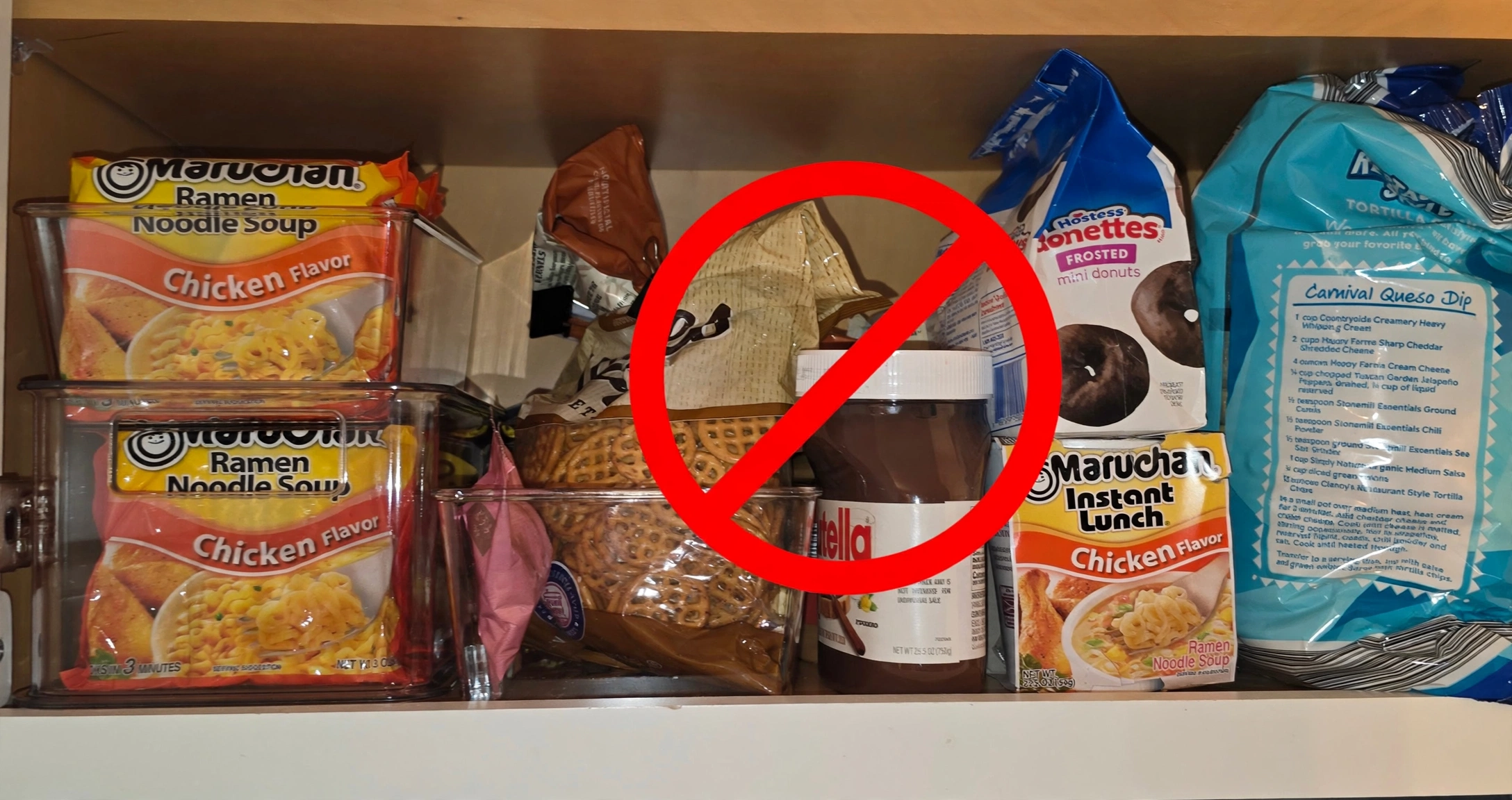
Habit 4: No snacking
This one is so easy and so hard at the same time. It's so simple — just don't eat between meals — yet so hard when you're dealing with that crash at 3 p.m. and the vending machine starts looking like a good idea.
Here's what I learned: the crash is mostly thirst and stillness wearing a hunger costume. Habits #2 and #3 already fight it. Hydrated and moving, the "need" for a snack gets a lot quieter.
When it still shows up, I drink water first and give it 15 minutes. Almost every time, it passes.
There's a quieter reason this works, underneath the hunger games. Every time you eat, insulin rises to deal with the food — and while insulin is elevated, fat burning is basically paused. Stop grazing and insulin gets a chance to fall between meals, your body burns through its glycogen stores, and then it flips over to burning stored fat. In one trial, people with type 2 diabetes who ate two larger meals instead of six small ones saw bigger improvements in insulin sensitivity — fewer eating occasions, better metabolic response. (Diabetologia, via Renal and Urology News)
Stretch the gap longer — like the overnight break in habit #6 — and you wander into autophagy territory: the process where your cells clean out damaged parts and recycle them. It ramps up the longer you go without food, and Columbia researchers found it's tied to your body clock — fasting-triggered autophagy kicked in during nighttime
fasts. Which is convenient, because that's when you're asleep anyway. (Genetic Engineering & Biotechnology News)
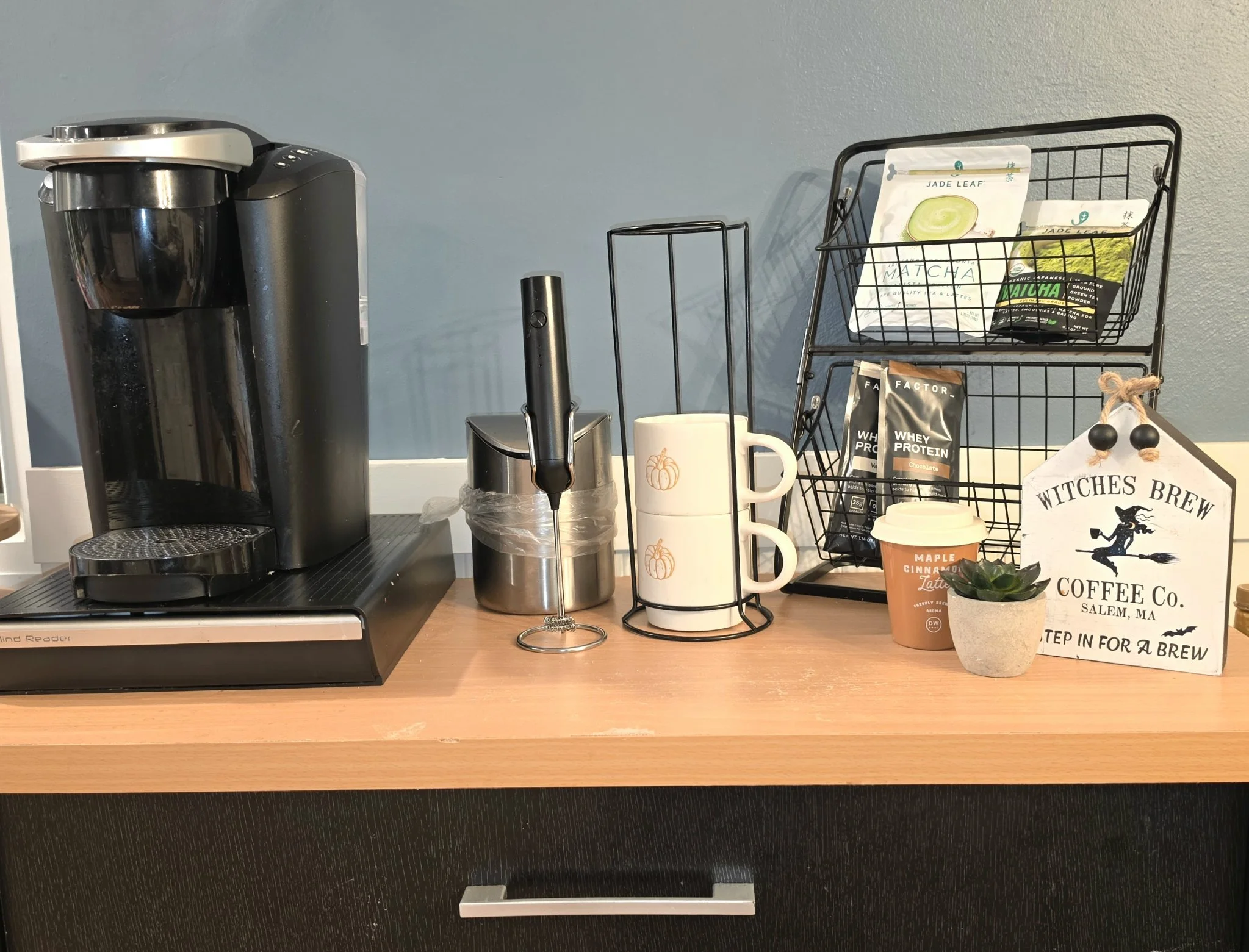
Habit 5: No coffee after 2 p.m.
This one's about sleep, not caffeine virtue. A meta-analysis in Sleep Medicine Reviews found that caffeine consumed within about 9 hours of bedtime cut total sleep by roughly 45 minutes and hurt sleep quality (Psychiatry Advisor) — my 2 p.m. cutoff with an 11 p.m. bedtime lands right on it.
Here's my reasoning, and I have opinions about this: a lot of women in their mid-to-late 30s are running on cortisol — law office stress, kids, the demands of everything, all at once. Research suggests chronically elevated cortisol tells your body to hold onto fat. And one of the most effective ways to keep cortisol in check is good sleep. So the coffee cutoff isn't really about coffee. It's a sleep habit wearing a coffee costume.
Habit 6: No eating after 8 p.m. (or 3 hours before bed)
Read this one twice, because there's nothing more profoundly easy than what I'm about to describe.
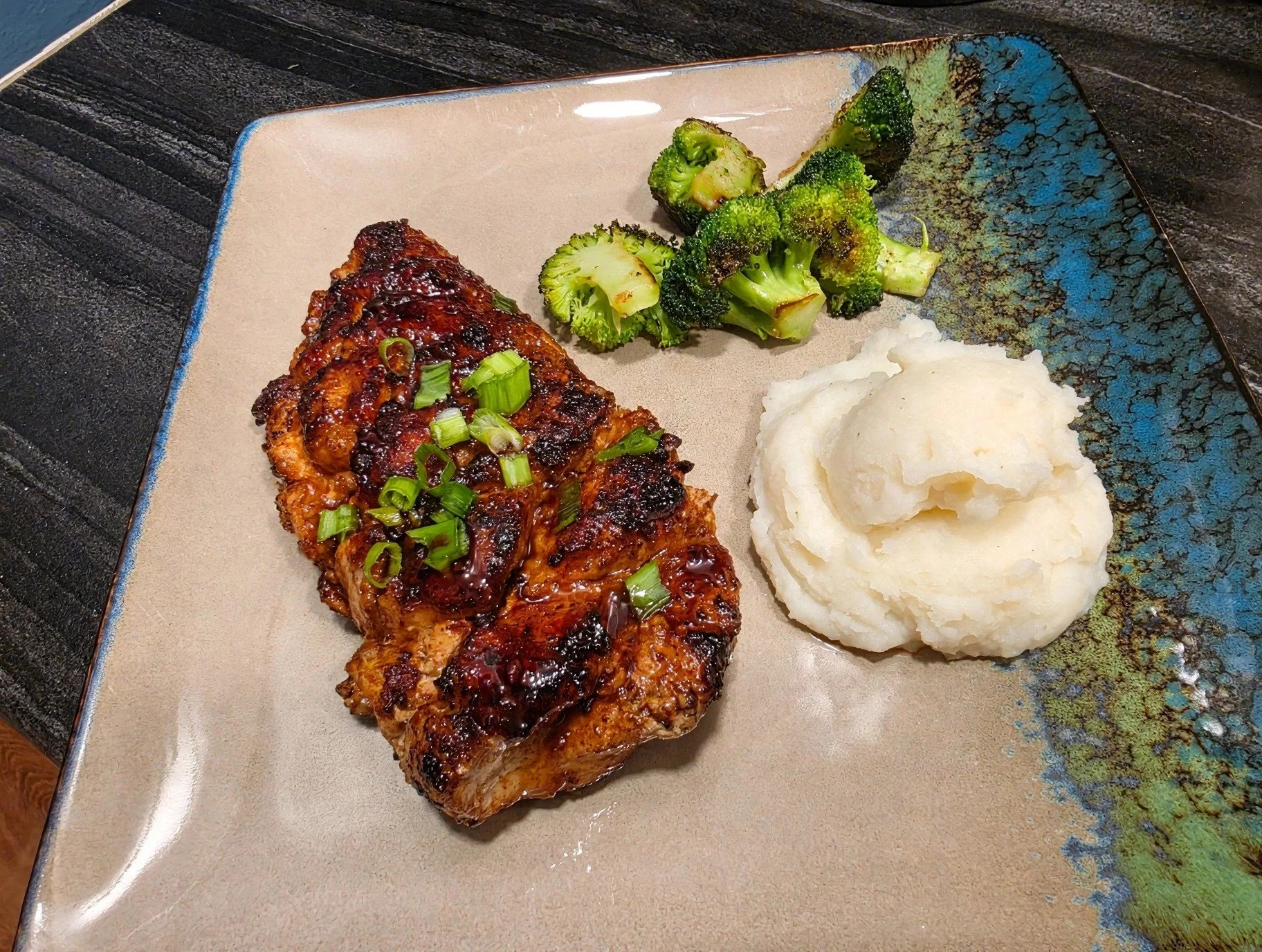
Your body has two modes: storing and burning. When you eat, insulin rises and your body stores. When insulin falls — like in the hours after your last meal — your body switches to burning stored fat for fuel.
Deep sleep is when your body releases the most growth hormone, which supports fat metabolism. So the hours you're asleep can be hours your body spends burning fat (life changing news!) instead of processing dinner. You just have to stop eating early enough that there's no digestion going on.
Here's the catch, and the research is genuinely cool: any food in your stomach at bedtime delays all of it. Vanderbilt researchers put people in a whole-room metabolic chamber and found that a 10 p.m. snack delayed the body's switch from burning carbs to burning fat — about 15 fewer grams of fat burned over 24 hours — compared to eating those same calories at breakfast (PLOS Biology, 2020; Vanderbilt news summary). Eating late literally postpones fat-burning for hours.
Habit 7: In bed by 11 p.m., minimum 7 hours of sleep
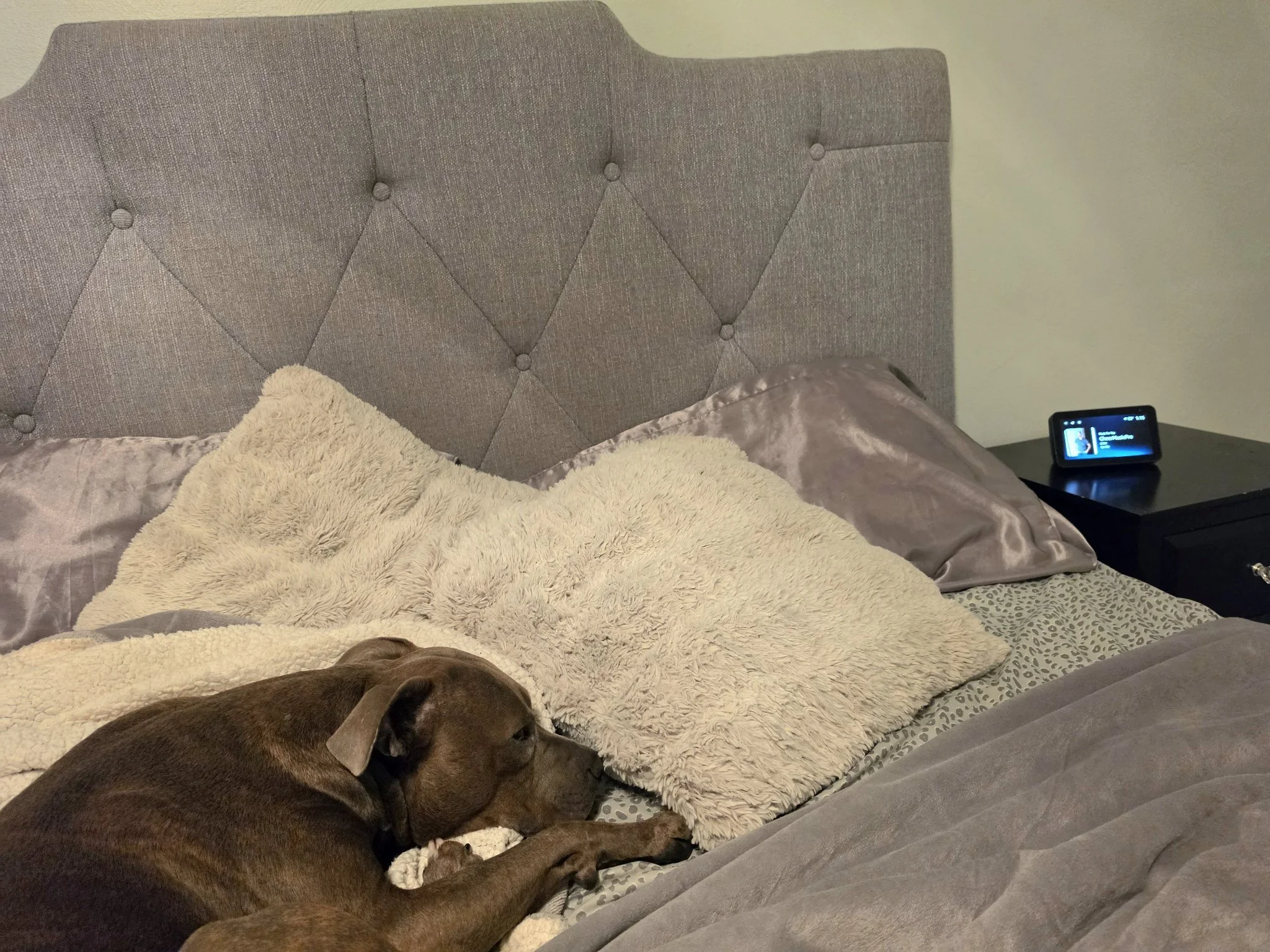
The other half of the sleep equation. Eight or nine hours would be ideal, but let's be honest — most of us in the legal field are lucky to get five or six. If you can't get eight, aim for seven. That's the floor, not the goal. And the earlier you're in bed, the better: 10 p.m. with eight hours beats midnight with seven.
Now the cortisol paragraph, because this is the big one. Chronically elevated cortisol — from stress, from short sleep, from that 4 p.m. coffee — tells your body to hold onto fat, specifically around the middle. University of Chicago researchers found that less than a week of short sleep measurably raised evening cortisol (University of Chicago Chronicle). And poor sleep raises cortisol further, which makes the next night's sleep worse, which raises cortisol again. It's a loop, and a lot of us are stuck in it without knowing it has a name.
Good sleep breaks the loop. It's the single highest-leverage habit on this list: it controls your hunger hormones, your stress hormones, and your body's overnight fat-burning window from habit #6. The evidence on belly fat got my attention too: in a small Mayo Clinic crossover study, just two weeks of short sleep increased participants' abdominal visceral fat by 11% — even though they had free access to food the whole time. And catch-up sleep didn't reverse it. Everything downstream gets easier when sleep is handled. And remember the food rule follows your bedtime — stop eating three hours before whatever time you actually go to bed.
(Irony alert: the night I finished writing this post, I was so energized from all these habits that I couldn't fall asleep. Habits one through six ganging up on habit seven. The fix is boring and it works: phone down, lights out, let your brain get bored.)
Habit 8: Track your food (do this one last)
This is probably the most powerful habit on the list — and the hardest, which is exactly why I'd implement it last, after the others are automatic. Build the foundation first. Then add the thing that requires actual discipline.
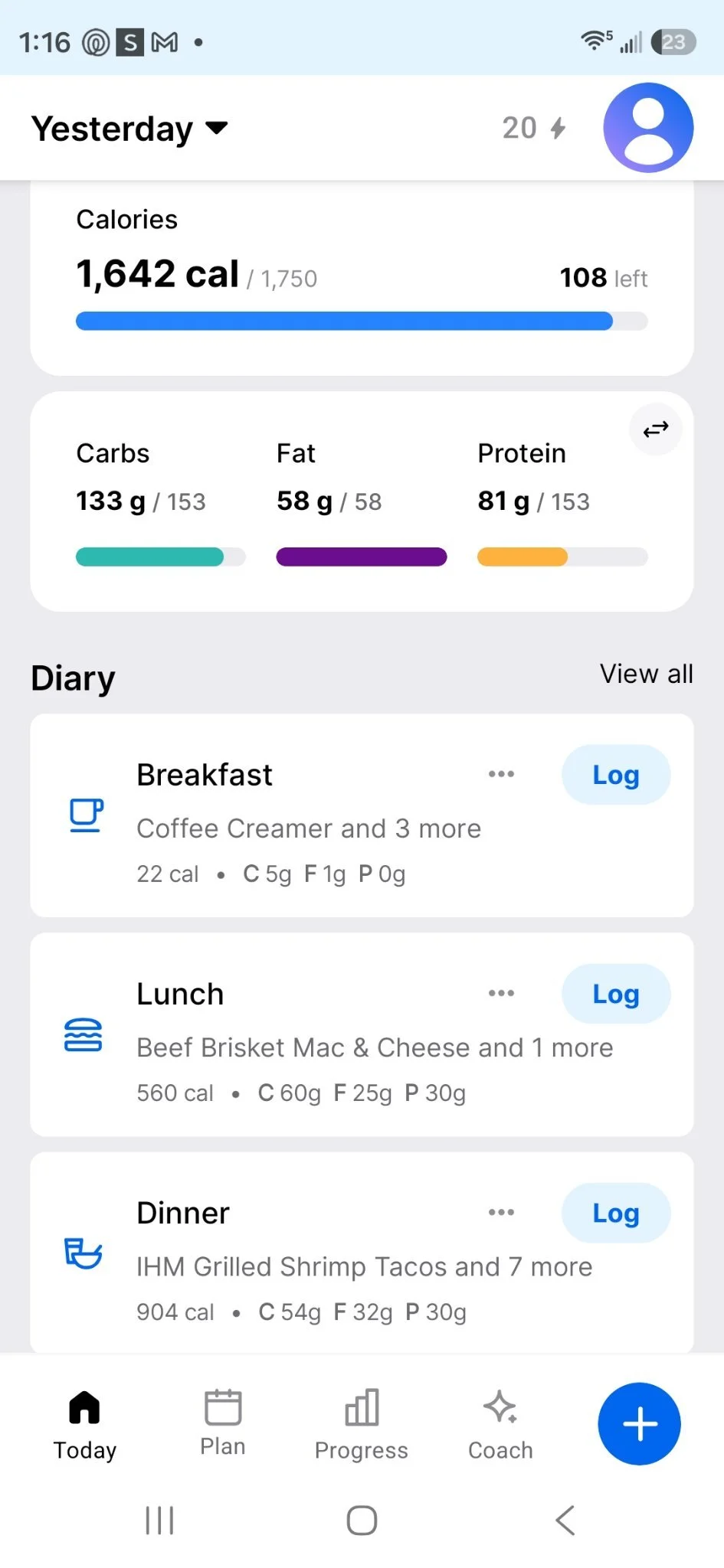
I use MyFitnessPal. It estimates your maintenance calories from your height, weight, age, and sex. Week one: eat at maintenance. Just track, no cutting. Then trim 100 to 200 calories. That's it. No massive deficit — because if your plan requires suffering, it's not a plan, it's a countdown to quitting.
And tracking has gotten ridiculously easy since the last time I tried it. Voice logging — press a button, say what you ate. Barcode scan, which has been around forever. And now meal scan: take a picture of your plate and it estimates it. Even on a slammed day at the office, when lunch is a sandwich with no barcode, I snap a photo before I eat. Takes seconds.
That last part is my rule, and it matters: log before you eat, not after. It shows you the calories ahead of time, which makes you make better decisions in the moment. It keeps you accountable. And it's purely practical — if you've already eaten it, you can't photo-scan it, and now you're typing everything in by hand.
The research backs this one hard: in a University of Vermont study, the most successful participants spent only about 15 minutes a day tracking — and it was the consistency of logging, not the detail, that predicted weight loss. Showing up beats being perfect.
And here's the part that makes it doable: tracking is not a life sentence. Commit to eight weeks. Eight weeks with an expiration date is a completely different psychological deal than "do this forever." Those eight weeks will be a massive wake-up call — you're going to realize just how many calories are in that packet of ranch — and once you actually learn it, it gets kind of fun. Use it for a season, put it down, pull it back out whenever you need a tune-up. The other seven habits are for life. This one is a tool you pick up and put down.
Now that I’ve explained my first 8 habits for getting sustainably healthy with a desk job, let’s talk implementation:
Track it on paper
One row per habit, one column per day, checkmarks. I do mine in a plain notebook every evening — there’s something about a physical checkmark on paper that an app can’t replicate.
Want something prettier?
Here are your freebies: a monthly Habit Tracker — print one per month and the Micro-Habits Checklist with all eight habits and a quick-start guide.
🎁 Download the Micro-Habits Checklist
The day I knew it was working
About four weeks into the office habits — months into the morning walks — I had the most stressful day imaginable. My son had just had knee surgery from a football injury. I was his caretaker, working from home, fielding client demands, taking him back to the doctor and the emergency room, walking the dog, getting my daughter to cheer practice — and somehow keeping up with my own schoolwork, because I'm finishing my education on top of everything else.
By 11 p.m. I was still going. And I had this strange feeling: why am I not crashing? I made it through that entire day. I cooked dinner. I felt great — honestly a little too great, like I was having trouble winding down for my 11 p.m. bedtime. That had never happened before.
That feeling started showing up more and more. That was the real result. Not the scale — the energy.
What's next:
Once these are locked in, the next habit I'm adding is weight training. Next we will talk about protein.
Here’s the deal: once I start my next set of eight habits, I’ll write that article too. Same deal as this one: real life, real research, no extremes.
Start with the walk. Lock it in. The rest follows.
— The Law Closet
